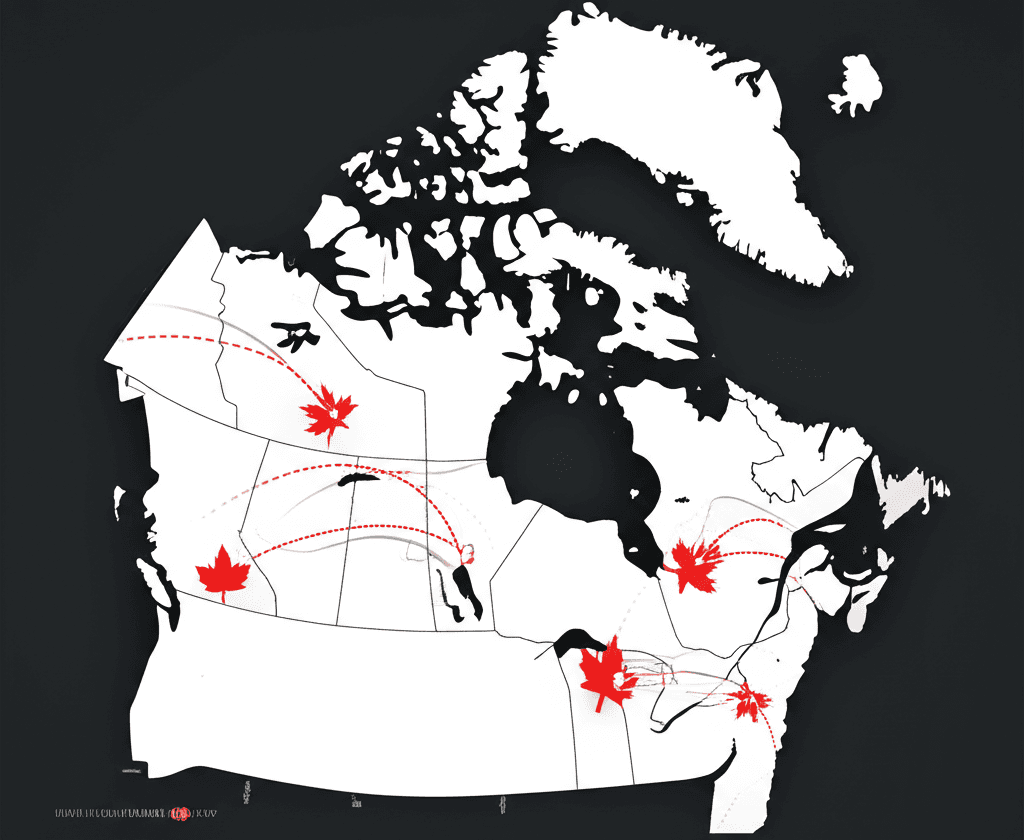
The Canadian Broadcasting System
Canadian television operates within a unique regulatory framework designed to balance cultural sovereignty with market realities. Sharing the world's longest undefended border with the United States, Canada has historically faced challenges maintaining a distinct cultural identity in broadcasting. The proximity to American media markets means Canadian audiences have always had easy access to US programming, creating competitive pressure that shapes Canadian broadcasting policy.
The Canadian broadcasting system serves approximately 15 million television households across the world's second-largest country by land area. This geographic reality creates unique challenges: delivering service to remote northern communities, serving two official languages, and maintaining economically viable local programming in smaller markets. Understanding these factors provides essential context for comprehending how television reaches Canadian viewers.
CRTC and Regulatory Framework
The Canadian Radio-television and Telecommunications Commission (CRTC) regulates all aspects of Canadian broadcasting. Established in 1968, the CRTC licenses broadcasters, sets Canadian content requirements, regulates cable and satellite providers, and enforces broadcasting standards. The commission operates under the Broadcasting Act, which establishes that Canadian broadcasting should be owned and controlled by Canadians and serve Canadian cultural objectives.
Canadian content regulations, commonly called CanCon, require broadcasters to dedicate specific percentages of airtime to Canadian-produced programming. For conventional television, 55% of evening programming and 50% of overall content must qualify as Canadian. Specialty channels face varying requirements based on their licenses. These rules support Canadian production industries that might otherwise struggle against the economic advantages of importing cheaper American content.
The CRTC also regulates simultaneous substitution, a practice unique to Canada that allows Canadian broadcasters to replace American network signals with Canadian feeds when both air the same program simultaneously. This ensures advertising revenue flows to Canadian broadcasters rather than American border stations, supporting the economic viability of Canadian television. The practice particularly affects major events like the Super Bowl, where Canadian ads replace American ones.
Canadian Television Market Overview
- •TV Households: Approximately 15 million households with television in Canada
- •Official Languages: English and French, requiring bilingual broadcasting services
- •Streaming Penetration: Over 80% of Canadian households subscribe to at least one streaming service
- •Cord-Cutters: Approximately 35% of households rely solely on streaming and antenna
- •Time Zones: Six time zones from Pacific to Newfoundland
Public Broadcasting: CBC/Radio-Canada
The Canadian Broadcasting Corporation (CBC) serves as Canada's national public broadcaster, operating television, radio, and digital services in both English and French. Founded in 1936, CBC receives approximately $1.2 billion annually in government funding, though this represents a smaller per-capita investment than most comparable public broadcasters internationally. CBC must balance public service mandates with commercial revenue pressures.
CBC Television operates the main English-language network, while Radio-Canada provides French-language service primarily in Quebec and francophone communities nationwide. The corporation also operates CBC News Network (English) and RDI (French) as 24-hour news channels. CBC Gem, the corporation's streaming platform, provides on-demand access to CBC content and serves as the digital future of public broadcasting in Canada.
Unlike the BBC's licence fee model, CBC funding comes from general government revenue, making it subject to annual budget negotiations and political considerations. This funding model has resulted in periodic budget cuts that affected programming capacity. CBC increasingly relies on advertising revenue and content licensing to supplement government funding, creating tensions between commercial and public service objectives.
Private Conventional Networks
CTV, owned by Bell Media, operates as Canada's largest private television network with strong ratings across news, entertainment, and sports programming. The network holds Canadian rights to major American series and produces significant original Canadian content. CTV's local stations across Canada provide regional news coverage, fulfilling CRTC requirements for local programming that supports community information needs.
Global Television, owned by Corus Entertainment, competes as the second major private network. Global focuses heavily on American acquisitions while meeting Canadian content requirements through news, reality programming, and scripted Canadian series. City, also owned by Rogers Communications, operates as a third private network with particular strength in major urban markets like Toronto, Vancouver, and Calgary.
Sports Broadcasting Landscape
Hockey dominates Canadian sports broadcasting, with NHL rights representing the most valuable sports property in the country. Rogers Communications holds national English-language rights under a landmark $5.2 billion, 12-year agreement signed in 2014. This deal transformed Canadian sports broadcasting, moving Hockey Night in Canada from CBC to Rogers' Sportsnet while CBC retained airtime through a sublicensing arrangement without rights fees.
TSN (The Sports Network), owned by Bell Media, and Sportsnet, owned by Rogers, dominate Canadian sports television. Both operate multiple regional feeds to accommodate Canada's multiple time zones and regional team coverage. TSN holds rights to CFL football, select NHL games, international soccer, tennis Grand Slams, and various other properties. The rivalry between Bell and Rogers for sports content has driven rights costs dramatically higher.
French-language sports broadcasting operates somewhat independently. TVA Sports, owned by Quebecor, holds French-language NHL national rights and serves as the primary sports network for Quebec audiences. RDS (Réseau des sports), owned by Bell Media, provides comprehensive sports coverage in French, including regional Montreal Canadiens broadcasts and various international sports properties.
Major Canadian Sports Rights Holders
- •Sportsnet: NHL national rights (English), Toronto Blue Jays (MLB), WWE, regional NHL teams
- •TSN: CFL football, select NHL games, FIFA World Cup, tennis Grand Slams, NBA
- •CBC: Hockey Night in Canada (sublicense), Olympics, FIFA World Cup (shared)
- •TVA Sports: NHL national rights (French), UFC, various soccer
- •RDS: Montreal Canadiens regional, CFL (French), European soccer leagues
French-Language Broadcasting
Canada's bilingual nature creates a distinct French-language broadcasting ecosystem, centered primarily in Quebec but serving francophone communities nationwide. This market operates with different dynamics than English Canada, producing substantial original programming rather than relying heavily on American imports. Quebec's strong cultural identity supports a vibrant domestic production industry that consistently generates popular local content.
TVA, owned by Quebecor, operates as Quebec's largest private French-language network. The network consistently achieves ratings that would be remarkable in any market, with local productions often outperforming American programming. Radio-Canada serves the public broadcasting function in French, while specialty channels like Canal Vie, Historia, and Séries+ provide niche French-language content unavailable in English Canada.
The French-Canadian market demonstrates that strong local content can compete effectively against American programming when it resonates culturally with audiences. This success provides a model that English-Canadian broadcasters have struggled to replicate, where American programming typically dominates prime-time ratings despite CanCon requirements.
Cable and Satellite Providers
Canada's television distribution market is dominated by large telecommunications companies that often also own content. Bell (Bell Fibe TV, Bell Satellite), Rogers (Rogers Ignite TV), and Telus (Optik TV) control the majority of English-Canadian subscribers. Shaw Communications, now merged with Rogers, previously operated as a major western Canadian provider. This vertical integration, where distributors also own programming services, creates ongoing regulatory concerns.
Satellite service through Bell Satellite TV serves rural and remote communities where cable infrastructure doesn't reach. Given Canada's vast geography, satellite remains essential for northern and rural television access. The CRTC mandates that certain basic services remain available nationwide, ensuring Canadians in remote areas can access essential programming regardless of location.
Streaming Transformation
Canadian streaming adoption has accelerated rapidly, with Netflix, Amazon Prime Video, Disney+, and other international services achieving high penetration. Netflix alone reaches approximately 8 million Canadian households. Canadian broadcasters have responded with their own streaming platforms: Crave (Bell Media), CBC Gem, and various network-specific apps attempt to retain audiences migrating from traditional television.
Crave, Bell Media's premium streaming service, combines licensed premium content and Canadian originals. The service represents the most ambitious Canadian streaming effort, though it faces challenges competing against global platforms with larger content libraries and production budgets. Crave's bundling with traditional Bell television packages helps maintain subscriber numbers.
The Online Streaming Act (Bill C-11), passed in 2023, extended CRTC jurisdiction to streaming services operating in Canada. This legislation requires platforms like Netflix and Disney+ to contribute to Canadian content production and make Canadian programming discoverable to users. Implementation details continue evolving, but the law represents a significant shift in how Canada regulates digital content delivery.
Technical Infrastructure
Canadian broadband infrastructure varies significantly between urban and rural areas. Major cities enjoy competitive high-speed options from multiple providers, with gigabit service increasingly available. Rural and northern communities face greater challenges, with some remote areas limited to satellite internet with higher latency and data caps. Federal programs aim to extend broadband access, but Canada's geography makes universal high-speed coverage exceptionally challenging.
Canada spans six time zones from Pacific to Newfoundland, requiring broadcasters to manage complex scheduling. Networks typically provide multiple feeds for different regions, ensuring prime-time programming airs at appropriate local times. Streaming services have simplified this challenge by offering on-demand access regardless of time zone, though live programming still requires regional scheduling considerations.