The Streaming Revolution
The way humans consume television content has undergone a fundamental transformation over the past two decades. What began as niche technology services in the early 2000s has grown to become the dominant form of television viewing in developed markets. As of 2023, streaming platforms represent 38% of global television consumption, with over 1.8 billion active subscriptions worldwide. By 2025, streaming has officially surpassed both cable and network television viewing in the United States, marking a historic shift in media consumption patterns.
This transformation extends beyond simple technological change. It represents a fundamental shift in how content is produced, distributed, and consumed. Traditional broadcasting operated on a one-to-many model where networks controlled scheduling and viewers adapted their lives around program times. Modern streaming inverts this relationship, putting viewers in control of what they watch, when they watch it, and on which devices they view content.
From Broadcast to Broadband
Television's journey from broadcast towers to internet streams represents multiple technological generations. The original over-the-air broadcasts of the 1940s and 1950s relied on radio frequency transmission, with stations broadcasting signals that any receiver within range could capture. This democratized access to television but limited channel availability and required line-of-sight to transmission towers.
Cable television, emerging in the 1960s and 1970s, addressed geographic limitations by distributing signals through coaxial cables. This infrastructure enabled more channels and consistent signal quality but required significant capital investment in physical networks. Satellite television, introduced in the 1990s, offered another alternative, beaming signals from geostationary satellites to small dish receivers, enabling service in areas without cable infrastructure.
Internet Protocol Television (IPTV) and Over-the-Top (OTT) streaming represent the current generation of this evolution. Rather than dedicated distribution infrastructure, these technologies leverage existing internet connectivity to deliver video content. This approach offers unprecedented flexibility: viewers can access content on any internet-connected device, from anywhere with sufficient bandwidth, without the geographic limitations of traditional broadcast methods.
Key Milestones in Television Evolution
- • 1940s-50s: Over-the-air broadcast television reaches mass adoption
- • 1970s-80s: Cable television expands channel options
- • 1990s: Satellite TV enables rural coverage
- • 2007: Netflix launches streaming service
- • 2025: Streaming surpasses cable viewing in the United States
Content Delivery Infrastructure
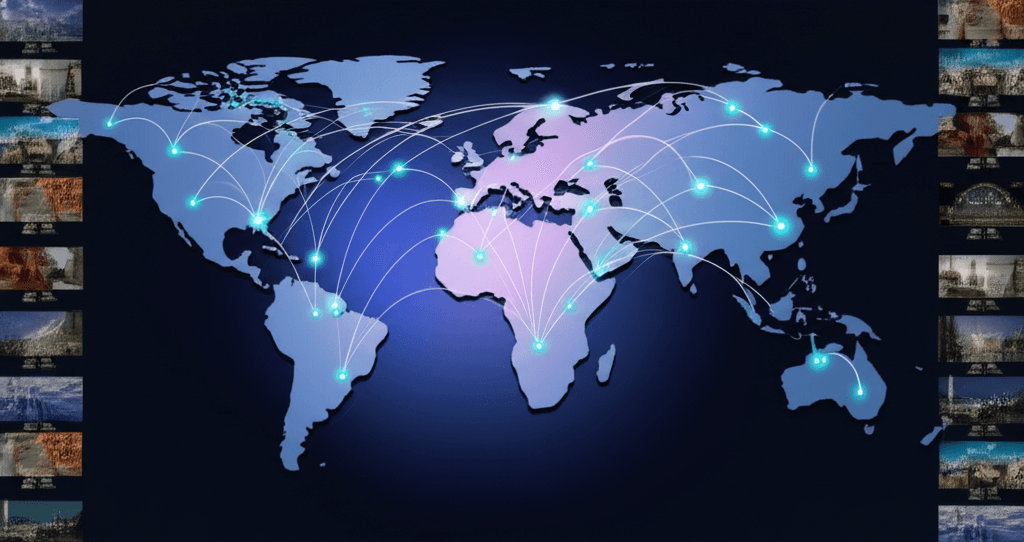
The infrastructure supporting modern streaming services represents one of the most sophisticated content delivery systems ever created. At its foundation are Content Delivery Networks (CDNs)—globally distributed networks of servers that cache and deliver content from locations near viewers. When you stream video, the content typically comes from a server within a few hundred miles of your location rather than a single central data center thousands of miles away.
Major CDN providers like Cloudflare, Akamai, and Amazon CloudFront operate thousands of edge servers worldwide. These servers store copies of popular content, reducing the distance data must travel and the load on origin servers. For live streaming, edge servers also help manage the massive concurrent viewership that events like sports broadcasts can generate. During the 2023 ICC Cricket World Cup final, Disney+ Hotstar handled 59 million concurrent viewers—a feat only possible through sophisticated CDN architecture.
The protocols used for streaming have evolved significantly. HTTP Live Streaming (HLS), developed by Apple, and MPEG-DASH (Dynamic Adaptive Streaming over HTTP) both use adaptive bitrate technology. These protocols divide video into small segments and offer each segment at multiple quality levels. The player monitors network conditions and automatically selects the appropriate quality for each segment, ensuring smooth playback even when bandwidth fluctuates.
Video Compression Technologies
Video compression makes streaming economically and technically viable. Uncompressed 4K video at 60 frames per second would require approximately 12 gigabits per second of bandwidth—far beyond what typical internet connections can provide. Modern codecs compress this to 15-25 Mbps for excellent quality, a reduction of more than 99% while maintaining visual fidelity that most viewers cannot distinguish from uncompressed footage.
The H.264/AVC codec, standardized in 2003, became the foundation of early streaming services and remains widely supported. Its successor, H.265/HEVC, offers approximately 50% better compression at equivalent quality but requires more processing power for encoding and decoding. The newer AV1 codec, developed by the Alliance for Open Media (including Google, Netflix, Amazon, and others), provides even better compression and is royalty-free, though it requires the newest hardware for real-time decoding.
The Cord-Cutting Movement
"Cord-cutting" describes the trend of consumers canceling traditional cable or satellite television subscriptions in favor of internet-based alternatives. What began as a fringe movement among tech-savvy early adopters has become mainstream consumer behavior. The appeal is multifaceted: lower costs, freedom from long-term contracts, access to on-demand content libraries, and the ability to watch on any device.
Economic factors drive much of this shift. Traditional cable packages often exceed $100 per month for bundles that include many channels viewers never watch. Streaming services offer more targeted programming at lower price points, allowing consumers to subscribe only to services that match their interests. Even subscribing to multiple streaming services typically costs less than a comprehensive cable package.
The rise of "virtual MVPDs" (Multichannel Video Programming Distributors) like YouTube TV, Hulu + Live TV, and Sling TV bridges the gap for viewers who want live television without traditional cable contracts. These services deliver live channel lineups over the internet, combining the channel experience of cable with the flexibility and device compatibility of streaming. They represent a significant portion of how cord-cutters maintain access to live sports, news, and events.
Streaming Market Statistics (2024-2025)
Global IPTV Landscape
The global IPTV and streaming market exhibits significant regional variation in platform dominance, content preferences, and technological adoption. North America and Western Europe led early streaming adoption, with Netflix establishing market dominance before regional competitors emerged. Asia-Pacific markets have grown rapidly, with country-specific services often outperforming global platforms due to local content libraries and pricing strategies.
India represents a particularly notable market, where JioHotstar (formed from the merger of Disney+ Hotstar and JioCinema) has achieved remarkable scale. Cricket broadcasting drives much of this engagement, with major matches attracting tens of millions of simultaneous viewers. The platform's record of 61.2 million concurrent viewers during a 2025 cricket match demonstrates the potential scale of IPTV infrastructure when optimized for specific regional content.
Market fragmentation has increased as media companies launch their own streaming platforms. Where Netflix once held near-monopoly status in streaming, viewers now choose among dozens of services including Disney+, HBO Max, Amazon Prime Video, Apple TV+, Paramount+, Peacock, and numerous regional platforms. This "streaming wars" environment has accelerated investment in original content while creating "subscription fatigue" among consumers managing multiple services.
The Future of Television Delivery
Several technological trends will shape the next generation of television delivery. Higher resolution formats, including 8K, will require further advances in compression technology and bandwidth availability. Extended reality (XR), encompassing virtual and augmented reality, may transform passive viewing into immersive experiences. Artificial intelligence increasingly powers content recommendation, with platforms using sophisticated algorithms to predict what viewers want to watch.
The integration of Internet of Things (IoT) devices with streaming platforms opens new possibilities for personalized viewing experiences. Smart home systems can adjust lighting and audio based on content type, while viewing habits across connected devices inform recommendation engines. Cloud computing continues to enable the scalability that streaming services require, allowing platforms to handle peak demand events without maintaining massive permanent server infrastructure.
Free ad-supported streaming television (FAST) represents a growing segment, with services like Pluto TV, Tubi, and The Roku Channel offering linear channel experiences without subscription fees. This model appeals to viewers seeking familiar channel-surfing experiences and advertisers looking for targeting capabilities beyond traditional broadcast. The coexistence of subscription, ad-supported, and hybrid models suggests a diverse future ecosystem rather than a single dominant approach.