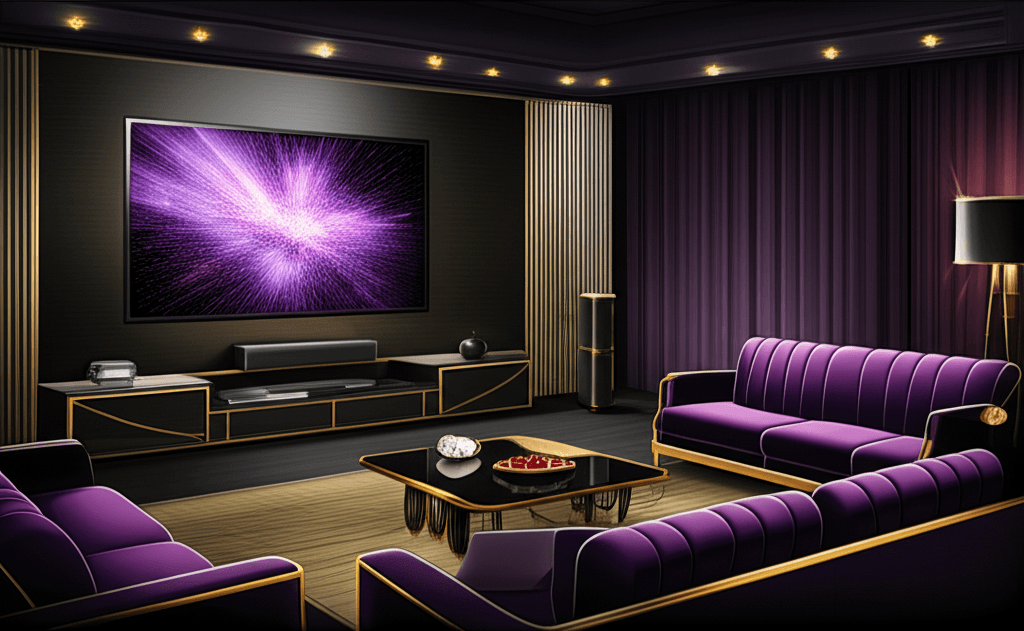
What Defines Premium Streaming Quality
The term "premium" in streaming encompasses multiple technical dimensions that together create an exceptional viewing experience. While standard definition streaming serves basic viewing needs, premium quality aims to match or exceed the visual and audio fidelity of theatrical releases and high-end broadcast television. Understanding these quality factors helps viewers appreciate what distinguishes premium services from basic offerings.
Premium streaming quality results from the combination of four key elements: resolution (the number of pixels displayed), dynamic range (the difference between the brightest and darkest elements), color depth and gamut (the range of colors reproduced), and audio quality (including spatial sound formats). Each element contributes independently to the viewing experience, but their combined effect creates the immersive quality that defines premium content.
Resolution: From HD to 4K Ultra HD
Resolution describes the number of pixels that compose each video frame. Standard Definition (SD) content at 480p contains approximately 345,600 pixels per frame. High Definition (HD) at 720p quadruples this to about 921,600 pixels, while Full HD at 1080p reaches approximately 2.07 million pixels. 4K Ultra HD (2160p) contains over 8.3 million pixels—four times the pixel count of 1080p Full HD.
The practical impact of resolution depends on viewing distance and screen size. On a 55-inch television viewed from 8 feet, the difference between 1080p and 4K becomes noticeable in fine details: text appears sharper, textures more distinct, and complex scenes reveal details invisible at lower resolutions. As screen sizes increase and viewing distances decrease, higher resolution becomes increasingly important for maintaining image clarity.
4K content requires significantly more bandwidth than lower resolutions. Uncompressed 4K video at 60 frames per second would require approximately 12 Gbps—far beyond typical internet connections. Modern codecs compress this dramatically: H.265/HEVC can deliver excellent 4K quality at 15-25 Mbps, while the newer AV1 codec achieves similar quality at even lower bitrates. Premium IPTV services invest in efficient encoding to deliver maximum quality within bandwidth constraints.
Resolution Comparison
- • SD (480p): 720 × 480 = ~345,600 pixels
- • HD (720p): 1280 × 720 = ~921,600 pixels
- • Full HD (1080p): 1920 × 1080 = ~2,073,600 pixels
- • 4K UHD (2160p): 3840 × 2160 = ~8,294,400 pixels
- • 8K (4320p): 7680 × 4320 = ~33,177,600 pixels
High Dynamic Range (HDR) Technology
High Dynamic Range represents one of the most significant advances in display technology, arguably more impactful than the transition to 4K resolution. HDR expands both the brightness range and color capabilities of video content, creating images that more closely approximate what the human eye perceives in the real world. Where standard dynamic range (SDR) content is mastered for displays capable of approximately 100 nits peak brightness, HDR content can be mastered for displays reaching 1,000 to 10,000 nits.
The expanded brightness range enables HDR content to display specular highlights—bright reflections, sunlight, explosions—with intensity that SDR cannot achieve. Simultaneously, HDR maintains detail in shadow areas that would appear as uniform black in SDR. This combination creates images with greater depth and dimensionality, making scenes appear more three-dimensional even on a two-dimensional display.
HDR Formats Explained
Several competing HDR formats exist, each with distinct technical approaches. HDR10, the most widely supported format, uses static metadata—brightness and color information that applies to the entire content. This approach works well but cannot optimize for individual scenes. HDR10+ adds dynamic metadata that adjusts settings scene by scene, improving results for content with varying brightness levels.
Dolby Vision represents the premium tier of HDR technology. It uses dynamic metadata with frame-by-frame capability, supports 12-bit color depth (versus 10-bit for HDR10), and includes a more sophisticated display management system that optimizes output for specific television capabilities. Dolby Vision content can fall back to HDR10 on non-Dolby Vision displays, ensuring broad compatibility while delivering superior quality on capable hardware.
Hybrid Log-Gamma (HLG) was developed jointly by the BBC and NHK specifically for broadcast applications. Unlike HDR10 and Dolby Vision, HLG requires no metadata and maintains backward compatibility with SDR displays. This makes it particularly suitable for live broadcasts where metadata management would add complexity. Many sports broadcasts and news programs use HLG when transmitted in HDR.
HDR Format Comparison
| Format | Metadata | Color Depth | Best For |
|---|---|---|---|
| HDR10 | Static | 10-bit | Universal compatibility |
| HDR10+ | Dynamic (scene) | 10-bit | Samsung TVs |
| Dolby Vision | Dynamic (frame) | 12-bit | Maximum quality |
| HLG | None | 10-bit | Live broadcasts |
Advanced Audio Formats
Premium streaming extends beyond video to include advanced audio formats that create immersive soundscapes. Traditional stereo audio places sounds along a left-right axis. Surround sound systems like 5.1 and 7.1 add rear channels and a dedicated subwoofer channel for low-frequency effects. Object-based audio formats like Dolby Atmos and DTS:X represent the current state of the art, treating individual sounds as objects that can be precisely positioned in three-dimensional space.
Dolby Atmos adds height channels to traditional surround configurations, enabling sounds to move overhead. In a theatrical setting, this might involve 64 speakers; home implementations typically use fewer speakers supplemented by ceiling-reflected or downward-firing drivers. The format supports up to 128 audio tracks and can include overhead object positioning data that creates convincing height effects even on simplified home configurations.
For streaming, Dolby Atmos content is typically encoded using the Dolby Digital Plus (E-AC-3) codec with Atmos extensions, or the more efficient Dolby AC-4 codec. These formats add minimal bandwidth overhead compared to standard surround sound while enabling the full Atmos experience. Most premium IPTV services include Atmos support on content where it's available, though playback requires compatible audio equipment.
Bitrate and Compression Quality
Beyond resolution and HDR, bitrate—the amount of data used per second of video—significantly impacts perceived quality. Higher bitrates allow encoders to preserve more detail and reduce compression artifacts. Two 4K streams with identical resolution might look dramatically different if one uses 15 Mbps while another uses 40 Mbps. Premium services typically allocate higher bitrates to ensure quality matches the premium positioning.
Compression artifacts appear when bitrate is insufficient for the content complexity. Common artifacts include blockiness (visible squares in areas of similar color), banding (visible steps in smooth gradients), and mosquito noise (shimmering around high-contrast edges). Premium encoding minimizes these artifacts through higher bitrates, sophisticated encoding algorithms, and per-title optimization that adjusts encoding parameters based on content characteristics.
Infrastructure Requirements
Delivering premium quality requires robust infrastructure throughout the delivery chain. Server capacity must handle encoding, storage, and distribution of larger file sizes. Content Delivery Networks need sufficient edge server capacity to serve high-bitrate streams without congestion. The additional bandwidth costs of premium content require business models that support higher infrastructure investment.
For viewers, premium streaming requires adequate home internet connections. While SD streaming works on connections as slow as 3 Mbps, 4K HDR content typically needs 25 Mbps minimum, with 50 Mbps recommended for reliable quality. Wired connections via Ethernet provide more consistent bandwidth than WiFi, reducing the likelihood of quality drops during demanding scenes.
Premium Streaming Requirements
- •Display: 4K TV with HDR support (HDR10 minimum, Dolby Vision preferred)
- •Internet: 25+ Mbps (50+ Mbps recommended for 4K HDR)
- •Audio: Dolby Atmos soundbar or AV receiver for immersive sound
- •Streaming Device: 4K-capable device with HEVC/H.265 decoder
- •HDMI: Version 2.0 or higher for 4K HDR passthrough